Category Archives: Books

Thalia Muses On: What is Fantasy?

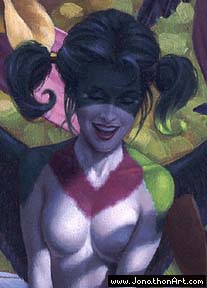
Thalia by Jonathon BowserI have a long and delightful relationship with Thalia, the Muse of Comedy. She lets me know when she has something to say, and I write it down for her.
—

There are those who would say that Thalia Herself is a figure of fantasy. There are differences between Myths, Archetypes, folklore and fantasy, but we won’t go into them here — mostly because I tend to cross the lines all over the place, myself. You may regard me as Fantasy if you wish, dear — just keep writing.

What Is Fantasy?

Froud fae 25On any mailing list, that question is good for about a week’s worth of debate. Which will eventually end without ever coming to a conclusion. In general, “fantasy” is fiction in which things can exist and happen that would not normally exist and happen in our waking lives. Unlike science fiction, it is permissible in fantasy to violate physical laws as we know them, even to flout logic itself — although most modern readers favor stories in which the fantasy elements are consistent within themselves; if you are going to have magic, have it follow its own logical system.

What is the difference between teleporting by magic mirror, teleporting by human mental power discovered in a scientific  laboratory, Scotty beaming up you up with the transporter, or traveling long distances instantly through hyperspace? It’s all “babble a little and pretend that explains it.”

The first one is fantasy because while waving your hands and babbling you used the word “magic.”  The others are all science fiction because while waving your hands and babbling you used the word “science.”
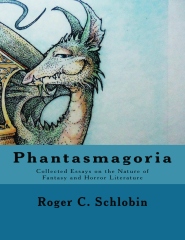
Phantasmagoria-CoverAnitra likes to say that science fiction is an excellent way to ask “What is ‘being human’?”  and fantasy is an excellent way to ask “What is reality?”  To me, the most powerful fantasy embodies archetypes, like folklore and mythology do and classic literature often does. It is easiest to deal with archetypes, dream images, and many other fundamentals of human psychology in fantasy, which echoes the earliest stories of our childhood and the human race’s childhood.

If you do want to analyze it some more, I recommend Phantasmagoria, a set of excellent essays by Roger Schlobin.

Ultimately, I define fantasy by reference to stories that I consider fantasy.

The Forgotten Beasts of Eld, by Patricia McKillip, is a classic example of high fantasy.  “High fantasy” is what most people think of in reference to “fantasy”: stories dealing with wizards, elves & magical beasts, uually in a low-technology, medievalish setting.

The Little Country, by Charles de Lint, is another classic. This is an example of “urban fantasy”, by one of the pillars of the genre. “High fantasy” tends to take place “long ago and far away”, usually in a low-technology setting. In urban fantasy, the setting is updated to our own modern world, yet the elements of magic and myth and archetype are kept. It takes a great deal of talent to make this work without making it a comic parody, but de Lint has the talent.

The Empire of the East, by Fred Saberhagen, is harder to classify. One review (by Eric S. Raymond) says, “Is this post-holocaust technology-of-magic SF, or heroic fantasy with rivets for flavor?” You’ve got gods, heroes, magic, a coming-of-age quest, and a whopping big army tank — you want to quibble about categories? As Eric says, “…it’s powerful stuff, a grabber from page one. Enjoy!”

Brian Froud fae 21Mojo and the Pickle Jar by Douglas Bell is another example of urban fantasy — and comic fantasy. It’s an example of a lot of things, all mixed together. It won the Philip K. Dick Award in 1991. It’s out of print, but look for it — it’s worth the effort.

I don’t think you need a definition of comic fantasy, do you? If you do, pick up any Discworld book by Terry Pratchett. You’ll get the definition.
Froud fae 26a

Some Fantasy Links

Charles de Lint homepage
Master of Urban Fantasy

The L-Space Web for all things Terry Pratchett & Discworldly

Jane Yolen a bibliography on Inkspot
Mistress of Fables

Patricia McKillip a bibliography from Putnam Berkeley Online
Patricia McKillip a fan page
Mistress of High Fantasy.

IF YOU LIKE THIS, THEN YOU’LL LIKE THAT page of the Ultimate Science Fiction Web Guide from MagicDragon Multimedia


Remember: Save America’s Vanishing Frompers!


Images adapted from the art of Jonathon Bowser and Brian Froud by Fantasyland Graphics


Singularitarians Who Might Congress

I was re-reading an old column this morning, that I wrote for what was then “Adventures in Poetry” (“What Wes Won’t Do“) while Wes took a break, in which I referred to having discovered a site for Congrescent Singularitarians. Curiosity re-sparked, I googled to see if they were still out there. Alas, the only remaining mention of Singularitarians ever congrescing is mine. Singular Singularitarians are still all over the web, tho’, and here are ten that should definitely be invited to any congress that may be held in the future: Top 10 Singularitarians of All Time.

Theological Themes in Science Fiction

From the beginning, many science-fiction novels have examined the tension between science and religion. If humans are indeed on our own in a mechanical cosmos, are we going to become our own gods? (Men Like Gods by H.G. Wells) Are we going to meet gods Out There to replace the ones we lost to the science that got us Out There? (If the Stars Are Gods by Greg Benford) Or do we need gods at all? (Soviet science fiction) Continue reading →

Remembering Owen Barfield, Writing Human Consciousness

Ironically, Owen Barfield is praised by those who know his work as one of the most important minds of the 20th Century — but few seem to know of his work.  He is listed last of the Inklings.

Of all the Inklings, the group of Oxford scholars that met regularly to discuss Christianity and mythology in the early 1900’s, one of the least often memorialized on the Net is Owen Barfield. The other central three — C.S. Lewis, J. R. R.
Tolkien and Charles Williams — wrote fantasy, as well as theology and philosophy. Owen Barfield wrote many books, mainly philosophy, but the closest he came
to fantasy was the fairy tale The Silver Trumpet. This may have something to do with the reading habits of web-builders.

But Barfield wrote such philosophy! I can’t believe that suchtopics as the evolution of human consciousness wouldn’t be interesting for websurfers in the 21st Century, so I have created this page to at least pull together what sources on Owen Barfield do exist, and make them more accessible.

This has, of course, already been done at the Owen Barfield World Wide Website. That is your best starting point for data on Owen Barfield and the life of a “purposely creative individual”. The obituary page includes copies of obituaries originally printed on other sites and now removed.

Sparkle in Eyelight is a selection from the works of Owen Barfield on the evolution of human consciousness. It is a snapshot introduction to his philosophical thought.

The Owen Barfield page at the C.S. Lewis site maintained by Upland Campus is a very compressed biography that also lists Barfield’s major writing on the study of language.

SEVEN: An Anglo-American Literary Review is a periodical for the discussion of seven related writers: George MacDonald, G K Chesterton, C S Lewis, J R R Tolkien, Charles Williams, Dorothy L Sayers and Owen Barfield.

Owen Barfield: The Evolution of Consciousness is an extensive collectionof notes by Stephen L. Talbott on Barfield’s philosophy.

Talbott’s book is summarized and reviewed online by Lothar Fritsch of the University of Missouri, including the section on Owen Barfield.

Gary Lachman has an excellent interview with Owen Barfield in Lapis magazine. This includes Owen Barfield’s gloomy comments on the Internet. The article is, unfortunately, no longer available on the Net, but you can contact Lapis for back issues.

One site that might have made Owen Barfield feel more optimistic about the potentials of the Internet: a MeaningPlace for online discussion of his works.

One of the elements of Barfield’s thought that may be most fascinatingto some, most upsetting to others, is alluded to in Owen Barfield’s Heresy: The Two Jesus Boys.

An Owen Barfield Panel was held at the Rocky Mountain Modern Language Association conference October 12-14, 2000. For more information, write
to David Joplin.

The periodical A Reader’s Journal, if you can find it in your library, has reviews of the following books:

  • Barfield, Owen, History, Guilt, and Habit, Wesleyan, 1979
  • Barfield, Owen, Owen Barfield on C. S. Lewis, Wesleyan, 1989
  • Barfield, Owen, Poetic Diction, Wesleyan University Press,
    1973
  • Barfield, Owen, Rediscovery of Meaning, Wesleyan Press, 1977
  • Barfield, Owen, Romanticism Comes of Age, Wesleyan Press, 1966
  • Barfield, Owen, Saving the Appearances, Wesleyan, 1965
  • Barfield, Owen, Speaker’s Meaning, Wesleyan, 1967
  • Barfield, Owen, Unancestral Voice, Wesleyan, 1965
  • Barfield, Owen, Worlds Apart, Wesleyan, 1963

Amazon has the following books by and about Owen Barfield in print and available, usually with reviews:

The following books are out of print, but you may find them at your local library or in a used books
search
:

  • C. S. Lewis’s “great war” with Owen Barfieldby Lionel Adey
  • Eager Springby Owen Barfield
  • Evolution of Consciousness : Studies in Polarity by Shirley
    Sugerman
  • History in English Wordsby Owen Barfield
  • History, Guilt, and Habitby Owen Barfield
  • The Magical World of the Inklings : J. R. R. Tolkien, C. S. Lewis,
    Charles Williams, Owen Barfield
    by Gareth Knight
  • Orpheus : A Poetic Dramaby Owen Barfield
  • Owen Barfield and the Origin of Languageby Owen Barfield
  • Owen Barfield on C.S. Lewisby Owen Barfield
  • Rediscovery of Meaning, and Other Essaysby Owen Barfield
  • Romanticism Comes of Ageby Owen Barfield
  • The
    Silver Trumpet
    by Owen Barfield (this does have a review at
    Amazon)
  • Speaker’s Meaningby Owen Barfield
  • This Ever Diverse Pairby Owen Barfield
  • Unancestral Voiceby Owen Barfield
  • What Coleridge Thoughtby Owen Barfield
  • Worlds Apart: a Dialogue of the 1960’s by Owen Barfield